

Sliding Gates NZ: Components, Clearance and Sliding vs Swing
Sliding or swing: what the site decides
The choice is usually made by the driveway rather than by preference. Sliding suits a driveway that slopes, because a swing gate has to arc over ground that is not level. It also suits a short driveway where a swinging leaf would foul a parked vehicle, and a boundary where you cannot give up the swing arc on either side. Swing suits a level entrance with room to open, and it is the simpler system with fewer moving parts along the ground. The trade with sliding is lateral space. The gate has to go somewhere when it opens, which means a clear run along the fence line roughly as long as the opening itself. If that run is blocked by a garage wall, planting or a bank, sliding becomes difficult before any other consideration.- Sloping driveway, short driveway, or no swing arc available, look at sliding
- Level entrance with clear space either side, swing is simpler
- Sliding needs a clear side run about as long as the opening
The components that make up a sliding gate
This is the part worth knowing before you compare quotes. Track or rail. Ground-running gates use an in-ground or bolt-down track that the gate wheels sit in. It has to be dead level over the full run, because any dip becomes a jam later. Track comes in lengths and is joined, so jointing pins matter on a long run. Rollers and wheels. The gate carries its weight on these. Bottom rollers do the load, top guide rollers keep the leaf vertical, and side guide rollers stop it wandering out of line. Guide roller assemblies. These bolt to the post or the wall and hold the gate upright as it travels. Our range includes gate catcher with guide roller units and top guide rollers with L brackets for different mounting positions. Catcher. At the closed end, a catcher takes the leading edge of the gate and supports it, so the far end is not cantilevered when the gate is shut. On a wide opening this is what stops the gate sagging over time. End stop. A bolt-down stopper at each end of travel, so the gate cannot run off the track in either direction. Gear rack, if automated. A toothed rack fixed along the bottom of the gate that the motor pinion drives against. We stock both a zinc-plated gear rack and a nylon gear track, in metre lengths that are joined along the leaf. Drive unit, if automated. The motor sits beside the track and engages the rack. Sizing follows the weight and width of the leaf. You can see the full fence and gate range for how these fit together.Cantilever or ground-running
Two ways to carry a sliding gate, and they behave differently. Ground-running rides on a track set into or bolted onto the driveway. It is the simpler and generally more economical option, and it handles heavier leaves well. The requirement is that the ground stays level and the track stays clear, which means sweeping out leaves and grit rather than ignoring the channel. Cantilever carries the gate on rollers mounted to the posts, with no track across the driveway at all. Nothing to sweep, nothing to catch a low car, and nothing that ponds water. The trade is that it needs a longer counterbalance tail behind the opening and heavier posts, so it costs more and takes more room. On a driveway that floods or collects debris, the cantilever premium usually pays for itself. On a clean level entrance, ground-running is the straightforward answer.- Ground-running: simpler, more economical, needs a clear level track
- Cantilever: no track across the drive, needs more side room and heavier posts
- Debris and standing water are the deciding factor more often than budget
Automation, and what to plan for early
Automation is easier to design in than to add later, even if you fit it in a second stage. The things to decide up front are where the motor will sit, how power reaches it, and where the safety devices go. Leaving a conduit run at the time the driveway is formed is far less painful than cutting one in afterwards. Weight and width drive the motor selection, which is why the gate design and the drive are specified together rather than in sequence.Posts, and why they carry more than people expect
A sliding gate puts load into the posts in a way a fence does not. The post at the closed end carries the catcher and takes the leading edge of the gate. The posts at the open end carry the guide rollers and resist the leaf trying to tip. On a cantilever gate the posts carry the entire weight. That means footing depth and post size follow the gate, not the fence. It is worth confirming what a quote assumes here, because it is the difference that is hardest to see and most expensive to correct.Maintenance that actually matters
Two habits keep a ground-running gate working, and neither takes long. Keep the track clear. Leaves, grit and stones in the channel are what turn a smooth gate into a juddering one, and on an automated gate they make the motor work harder than it should. A sweep through the channel now and then is the whole job. Check the guide rollers stay adjusted. They are what hold the leaf vertical, and a leaf that has started to lean puts uneven load through the bottom rollers. Catching it early is a quick adjustment rather than a replacement. On a cantilever gate there is no channel to clear, which is a large part of why people choose it on a site that collects debris.Pool gates are a separate question
If the gate forms part of a pool barrier, it is not just a gate. Pool barrier gates have specific requirements around self-closing and self-latching that ordinary driveway gates do not, and a sliding gate is not usually the right product for that duty. We cover the barrier side in our pool fence compliance guide, and our pool fence and gate range is built for that application. Requirements are confirmed with your local council for your specific site.What shapes the cost
There is no single figure for a sliding gate, because the same opening can be specified several ways. The factors that move it are consistent:- Opening width, which drives leaf weight and therefore hardware sizing
- Ground-running or cantilever
- Infill style, whether slat, mesh, louvre or solid panel
- Manual or automated, and the drive specified
- Post size and footings, which follow the gate rather than the fence
- Site access and whether the driveway needs work to take a track
- Finish, including powder coating
Frequently asked questions
How much side room does a sliding gate need?
Roughly the width of the opening again, running along the fence line, so the leaf has somewhere to go when it opens. Cantilever gates need more than that, because of the counterbalance tail behind the opening. It is the first thing to check on a tight site.
Is a sliding gate better than a swing gate on a sloping driveway?
Usually yes. A swing gate has to clear rising ground through its whole arc, which either limits how far it opens or requires the ground to be reworked. A sliding gate travels along the boundary rather than over the driveway, so the slope matters far less.
What is a gate catcher for?
It supports the leading edge of the gate when it is closed, so the far end is not left unsupported. On wider openings it is what prevents the leaf sagging over time, and it also gives the gate a defined closed position.
Can an existing sliding gate be automated later?
Often, provided the gate runs freely, the posts can take the additional hardware, and there is a practical route for power. Fitting a gear rack to an existing leaf is common. The check worth doing first is whether the gate already moves smoothly by hand, because automation does not fix a track problem, it accelerates it.
Do sliding gates work for pool fencing?
Pool barrier gates have their own requirements around self-closing and self-latching, and a sliding driveway gate is generally a different product for a different job. If the gate forms part of a pool barrier, treat it as a barrier component and confirm the requirements with your local council.
Getting it specified
The useful conversation starts with the opening width, the slope, and what is alongside the driveway. From there the hardware set follows fairly quickly. Talk to our team with those three details and we can work through what the system needs.Related Posts
August 11, 2026
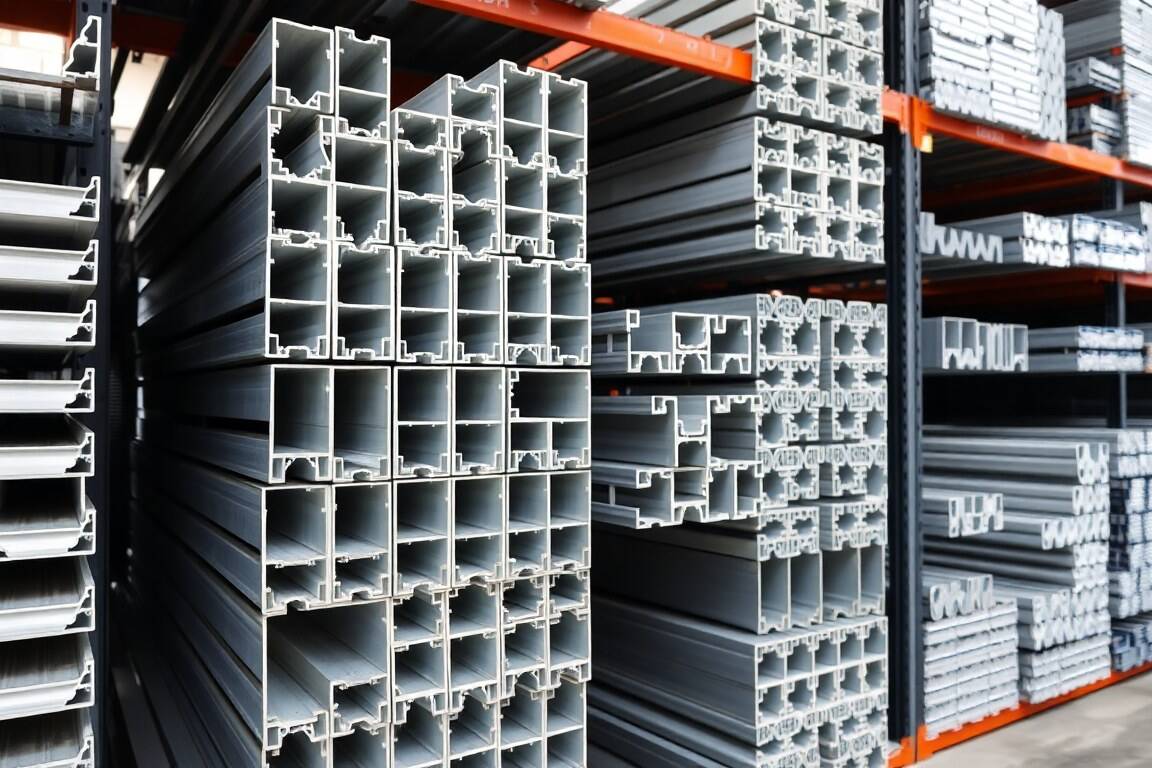
Aluminium Extrusion Profiles NZ: Which Shape for Which Job
Angle, flat bar, box section, round tube or solid. A practical way to pick the…


